Emirates Delhi-Dubai flight delayed following bird strike on arrival
By Business & Property Desk1 min read
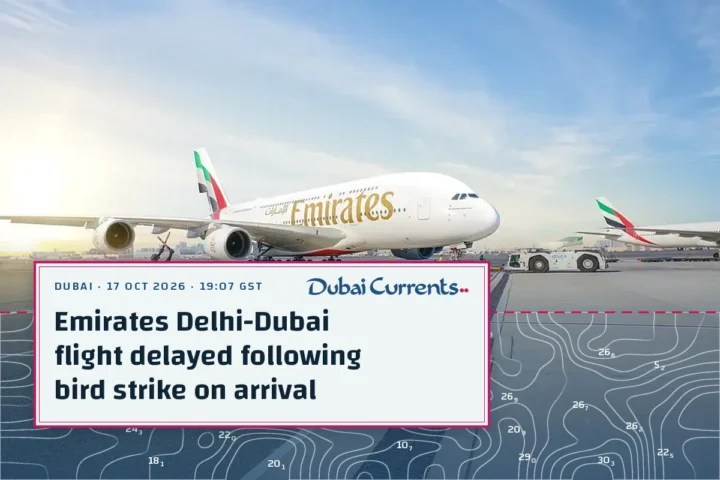
Flight Delay After Bird Strike
Emirates, the Dubai-based carrier, informed Khaleej Times that flight EK517 from Dubai to Delhi experienced a bird strike on arrival on 17 October 2026, prompting a delay of the return journey to Dubai.
The aircraft is undergoing repairs, and the return flight EK518 from Delhi to Dubai is postponed while engineers carry out the necessary work. Emirates said the plane is now expected to depart Delhi at 07:00 local time on 18 October, which corresponds to 05:30 UAE time.
Operational Details and Passenger Care
Emirates is arranging hotel accommodation for passengers affected by the delay. The airline’s spokesperson said, “Emirates apologises for any inconvenience caused. The safety of our passengers and crew is of the utmost importance and will not be compromised.”
Broader Context of Bird Strikes in Aviation
Bird strikes are among the most frequent safety events in aviation, although the vast majority cause little or no damage. The US Federal Aviation Administration records well over 15,000 wildlife strikes each year, most involving birds, while the International Civil Aviation Organisation receives several thousand reports annually, a figure thought to understate the true total because reporting is voluntary in many countries.
Such incidents occur mainly during take‑off, initial climb, approach and landing, when aircraft are below about 3,000 feet and flying through the altitudes where most birds live. Only a small fraction of strikes, typically fewer than one in five, result in any damage, and fatal accidents are rare. The infamous 2009 US Airways Flight 1549 “Miracle on the Hudson” ditching, caused by a flock of Canada geese striking both engines, remains the best‑known exception.
Airports worldwide manage the risk through habitat control, radar monitoring, trained falconers and bird‑scaring devices, which keeps the danger, while constant, generally well contained.