Self-driving wheelchair, special lounge: Emirates and dnata reveal accessible travel concepts at Dubai expo
By Dubai Currents Staff3 min read
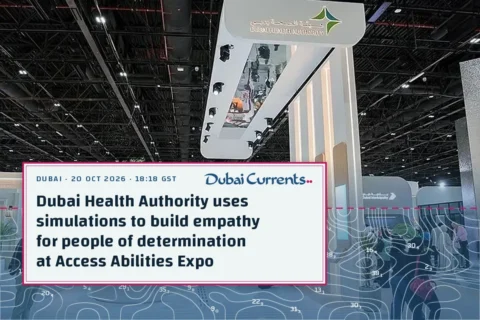
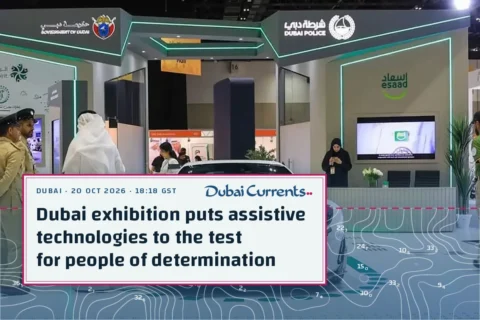
At the AccessAbilities Expo 2026 in Dubai, Emirates and dnata showcased concepts aimed at making air travel more comfortable for people of determination. The event, which runs from 19 to 21 October at the Dubai World Trade Centre, features demonstrations of an autonomous wheelchair, smart glasses that read boarding passes, and a private lounge suite designed for easier transfers.
Autonomous wheelchair trial
Dnata is testing a self-driving wheelchair that can take a passenger to their boarding gate without manual assistance. A representative explained that users select a destination, such as a gate, on a tablet. Four cameras and a lidar sensor, which uses laser light to detect objects, help the chair navigate its surroundings. It stops when it encounters an obstacle and can alter its route if the blockage persists. A back-office team monitors the journey and can take remote control if necessary. Manual joystick operation is restricted to trained staff. Dnata has trialled the wheelchair at a Dubai airport, and feedback from passengers has been shared with the manufacturer for further development. The device remains under testing.
Cabin familiarisation and smart glasses
Emirates is exploring an audio-led cabin familiarisation concept to help blind or low-vision passengers understand the space around them. Suhail Amshan, senior manager at the airline’s Office of Accessibility and Inclusion, said sighted travellers immediately take in the lighting, seats and cabin design when boarding, but those who are blind or have low vision may not get the same sense. At the expo, visitors can sit in an Emirates A350 seat fitted with a U-Dream headrest, explore it through touch and listen to descriptions of the cabin. “One thing that we recognise is that they don’t get a sense of where they’re sitting,” Amshan said. “The concept is around giving them an audio description of what the cabin design looks like.”
In a separate demonstration, Fatih Bayezid, a senior robotics engineer on the innovation team, showed how an application connected to Meta glasses can answer questions about the location of cabin features, describe what is in front of a user and read a boarding pass. Bayezid said the application is an initial prototype, with feedback being collected from prospective users. It is not being presented as a service already available on flights.
Accessible lounge and biometrics
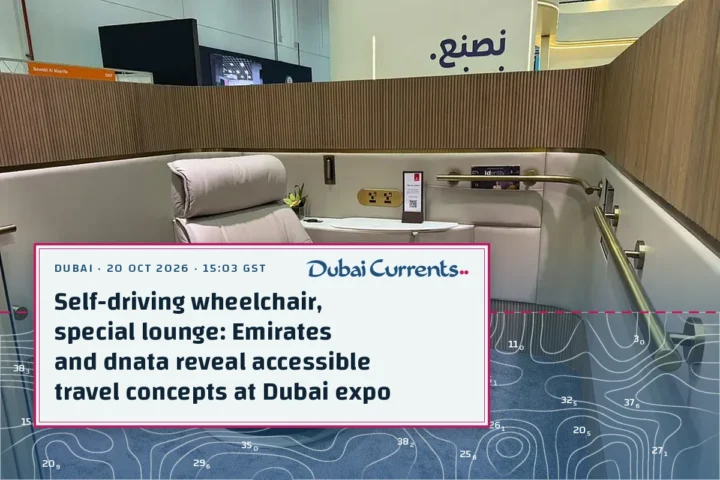
Emirates’ accessible lounge suite prototype offers more room to transfer from a wheelchair and relax in privacy before a flight. The design includes grab bars, wheelchair storage and a powered recliner with lift, swivel and recline functions. It is being developed for First Class lounges, with the possibility of extending the concept to other classes later. Amshan said the chair’s powered movement could help older travellers and people with conditions such as arthritis rise from a seated position without placing as much pressure on their knees. Feedback on the space and specifications will inform the final design.
Fabio Marcelli, Emirates’ Dubai lounges manager, said accessibility improvements are also being incorporated into a planned Business Class lounge in Concourse C, including accessible ablution and shower facilities. He described plans for biometric lounge entry, a dedicated entrance for customers using assisted services and a children’s-room concept incorporating sensory elements. Separately, Emirates is showcasing accessible biometric boarding technology. Its published update says cameras can adjust to different heights and angles, allowing wheelchair users to move through without having to adopt a prescribed position.
Travel rehearsals for families
Amshan said conversations with parents had shown that an unfamiliar airport journey can feel so overwhelming that they avoid taking that first step. Travel rehearsals let families practise procedures without the pressure of an imminent departure. “This is about practice. This is about making sure you feel comfortable,” he said. Families can familiarise themselves with check-in, security and boarding. Where arrangements allow, children can enter an aircraft, meet crew and practise fastening their seat belts.
Emirates’ 19 October update says it has completed 80 travel rehearsals across six continents, reaching more than 400 families. More than 35,000 staff have been trained to support customers with autism. Amshan said the sessions also help employees learn directly from passengers, while educators can take those lessons back into classrooms. The aim, he said, is to provide information and support rather than make decisions on passengers’ behalf — whether that means choosing a seat with fewer sensory distractions or identifying changes that would make the journey more comfortable.