GCC workers embrace AI but confidence lags behind, Al-Futtaim study shows
By Dubai Currents Staff2 min read
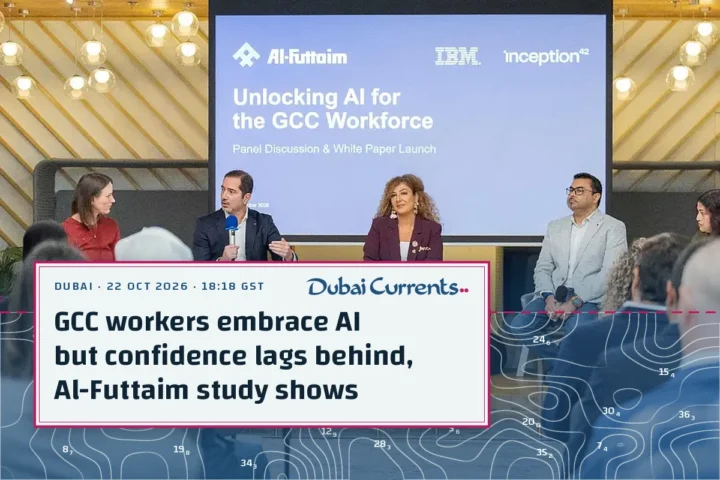
A study by Al-Futtaim has found that 82% of professionals across the Gulf Cooperation Council (GCC) use artificial intelligence on a daily or weekly basis, yet only 39% say they feel very or extremely confident in using the technology. The findings, released at an event in Dubai on Thursday, highlight a gap between the adoption of AI tools and the readiness of the workforce to deploy them effectively.
High usage, low confidence
The survey, conducted in March 2026, polled 1,143 professionals in six GCC countries, with the majority based in the United Arab Emirates and Saudi Arabia. Smaller samples came from Kuwait, Qatar, Bahrain, and Oman. Respondents worked in retail, automotive, hospitality, and technology sectors. The report cautioned that results from the smaller markets should be treated as indicative rather than representative of their national workforces.
Despite the confidence gap, many workers are already seeing benefits. According to the study, 73% of regular AI users said the technology had improved their productivity, while 35% of all respondents reported saving at least four hours each week. The findings suggest that AI is moving beyond experimentation and becoming part of everyday work.
Training shortfalls identified
While 53% of respondents said their organisations actively encourage AI use, only 20% reported receiving extensive training. The study identified data security and lack of training as key barriers to more effective use of the technology.
During a panel discussion at the Dubai event, speakers argued that traditional training programmes may not be enough. One panellist described an organisation that introduced AI learning content and saw high participation but initially struggled to change daily work habits. The turning point came when employees were encouraged to focus on specific problems AI could solve, rather than just learning how to use the tools. Panelists stressed the importance of making training relevant to different roles, from frontline customer service to office-based staff, and demonstrating how AI can address everyday challenges.
Trust and security concerns
Data security was the most frequently cited barrier, with 36% of respondents naming it a concern. Business leaders at the event emphasised that trust, governance, and responsible use must be built into AI projects from the start, rather than added later. Without these safeguards, employees may remain hesitant to use AI tools even when they are available.
Leadership and structured training link to confidence
The study found that employees who received extensive AI training were 2.5 times more likely to report high confidence than those who had none, and twice as likely to save four or more hours per week. Structured training appears to help employees move beyond occasional use and apply AI more effectively.
Panelists also highlighted the role of senior executives. AI adoption was three times higher in organisations where leaders actively used the technology themselves. The panel suggested that companies should redesign business processes around AI, focusing on improving entire workflows rather than simply speeding up existing tasks, while keeping people at the centre of the transformation.
For GCC businesses, the study points to a challenge that extends beyond providing access to AI tools. As the technology becomes part of daily working life, companies need to ensure employees have the skills, confidence, and support to use it effectively. The survey was conducted in March 2026 across the six GCC countries. The report noted that findings from smaller markets should be considered indicative.