Middle East tensions and supply return cloud oil market outlook, analysts say
By Business & Property Desk2 min read
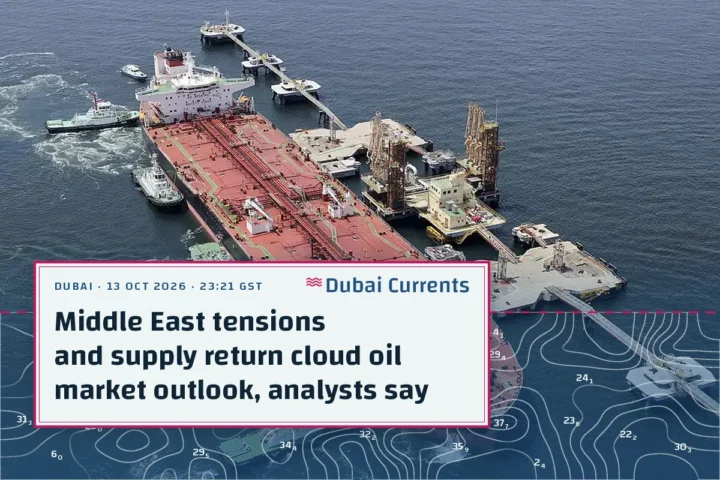
Oil markets are facing a period of deep uncertainty, according to analysts in Dubai, as Middle East geopolitical risks vie with indications that extra supplies may re-enter global trade.
Crude prices have fallen from recent peaks, but experts caution that threats to shipping lanes and energy facilities are still fuelling market instability.
Brent crude has been trading at about $105 to $107 per barrel, while West Texas Intermediate has held near $92 to $93. Analysts note that the future price trend will hinge on whether better supply conditions overcome persistent geopolitical dangers.
Uncertainty grips oil markets
Waleed Said, technical analyst at GivTrade, said the market is wrestling with two opposing scenarios. “Diplomatic advances could bring large amounts of fuel back into international commerce, but a fresh disruption might cut off supply before those gains happen,” he stated.
Expectations of higher Russian diesel shipments, along with hopes for a Russia-Ukraine energy ceasefire, have fuelled speculation that some strain on global fuel markets may lessen. Yet worries persist about tanker traffic via the Strait of Hormuz and attacks connected to regional hostilities.
Said warned that the global energy market is fragile because inventories have dropped sharply. “The 507 million barrel fall in stockpiles since February shows how exposed the market is to further shocks,” he said.
Supply and demand signals mixed
Analysts also cite softening demand forecasts as a possible check on prices. OPEC has reportedly cut its 2026 oil demand growth predictions, and the International Energy Agency has forecast reduced worldwide consumption.
But analysts at forex.com contend that falling crude prices might ease inflation worries that have depressed global financial markets. Razan Hilal, market analyst at forex.com, said: “Markets are now trapped between milder inflation hints from crude and tighter financial conditions from US Treasury yields.”
Hilal observed that Gulf exports are slowly returning to pre-war volumes and that crude has a neutral-to-bearish technical stance. forex.com sees $86 for WTI and $93 for Brent as key levels; a drop below those would probably strengthen expectations of easing inflation.
Geopolitical and logistics risks persist
Geopolitical events still overshadow the market. Vijay Valecha, chief investment officer at Century Financial, said: “The true energy shock is not just a supply shortfall, but a logistics premium added to every barrel in transit.”
Valecha noted that investors are paying more attention to the expense and dangers of transporting oil through global supply networks, such as shipping hold-ups, insurance charges and security threats. “Just because the market has managed to maintain oil flows does not mean it can withstand another big disruption,” he said. “That is the risk that may be underestimated.”
For investors in the UAE, analysts said the outlook will hinge not just on supply and demand basics but also on whether regional conflicts relax and major economies escape a deeper downturn. Until that happens, oil prices will probably be influenced as much by geopolitics and logistics as by conventional market forces.