Business Updated
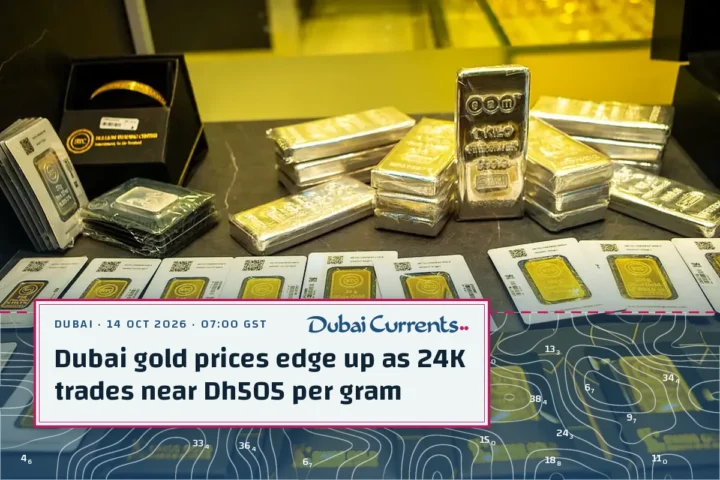
Dubai gold prices edge up as 24K trades near Dh505 per gram
By Dubai Currents Staff1 min read
Price Movements
On Tuesday, 13 October 2026, at 9:30 AM, gold prices in Dubai edged higher after shedding some of the previous evening’s gains. According to the Dubai Jewellery Group, 24‑karat gold traded at Dh505.75 per gram, 22‑karat at Dh468.25 per gram and 21‑karat at Dh449.0 per gram.
Market Drivers
Spot gold rose 0.8 percent to $4,199 an ounce as oil prices slipped, while investors turned their attention to the forthcoming US inflation data for hints on the Federal Reserve’s interest‑rate path.
Analyst Commentary
Naeem Aslam, chief investment officer at Zaye Capital Markets, said the recovery in gold reflects improving conditions for precious metals, with falling energy prices and a relatively subdued US dollar easing pressure on bullion.
He added: “US President Donald Trump’s announcement of a proposed energy ceasefire between Russia and Ukraine, alongside an agreement to increase Russian diesel supplies, has contributed to falling oil prices. Lower energy costs could support gold by reducing expectations for restrictive monetary policy, although sustained price appreciation will depend on whether Treasury yields and the dollar continue to moderate.”
Aslam noted that geopolitical uncertainty remains a key driver of gold’s safe‑haven appeal.
He continued: “Although President Trump announced an immediate energy ceasefire, continuing attacks on energy infrastructure have raised doubts about its implementation, leaving the possibility of further disruptions to global energy supplies.”
Aslam believes any credible easing of regional tensions could temporarily weaken demand for defensive assets, especially if investors shift toward equities.
He concluded: “Conversely, renewed disruptions to energy shipments or a deterioration in diplomatic negotiations could strengthen gold demand. The critical distinction is whether lower oil prices reduce inflation expectations sufficiently to outweigh any decline in geopolitical risk premiums.”